
New Name, New Look, New Challenge!
This year's Challenge uses our digital skills to explore SDG #3, Good Health and Well-being.
New Name, New Look, New Challenge!
This year's Challenge uses our digital skills to explore SDG #3, Good Health and Well-being.
Plastic that’s thrown away will eventually decompose like paper or food scraps, right? Unfortunately, not. Let’s take a look at macroplastics and microplastics.
Macroplastics are plastics you can see, like plastic bags and water bottles. But over time, macroplastics start to break down into smaller and smaller pieces, and become microplastics.
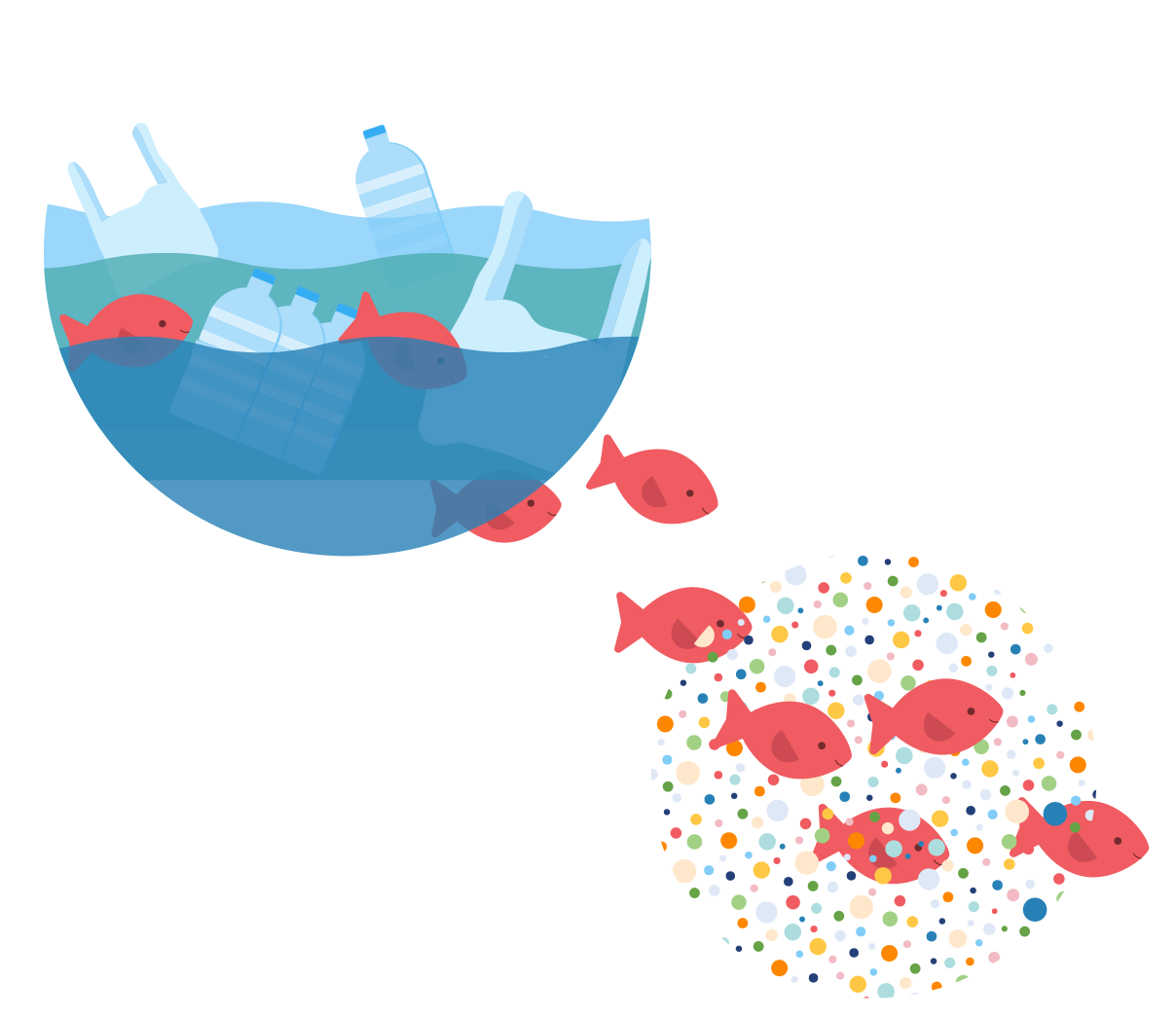
When organic materials like food or wood break down over time, they decompose into natural elements that enrich the earth. However, because plastics are created using synthetic materials, they do not naturally decompose back into the earth.
Can you match the plastic item that’s ended up in the ocean with the number of years it takes to break down?
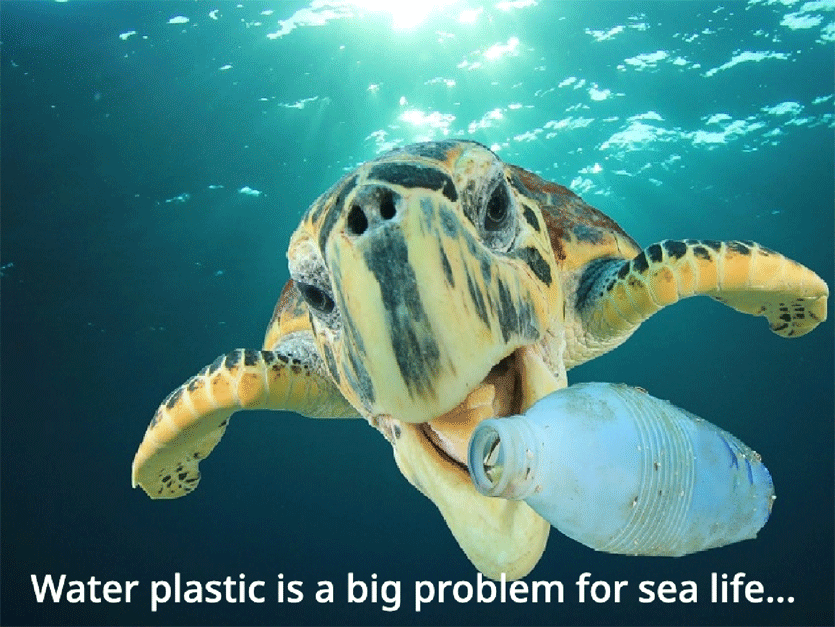
You’ve just learned that the ocean is full of macroplastics that break down into microplastics — let’s look at how this affects you. Microplastics are toxic substances that end up in the stomachs of seabirds, fish, even in sea salt!
Now that you’re beginning to see why plastic waste is such a big problem for our planet, let’s reflect:
You’ve completed the fourth step of the challenge — way to go!
You’ve learned that once plastic makes its way into the ocean, it’s very hard to get it out. You can now move on to the Data section to start collecting data on your own plastic consumption habits.
Not in a rush and want to take it a step further?
These extension activities will teach you how to animate your own story in Scratch (like the Pop Quiz above) and guide you through a data visualization reflection.

Learning Objectives
Recommended ages
Ages 7+
Recommended duration
20-30 min
Use Scratch to tell your own story about the effects of plastic on the environment using backdrop switches, images, text and sprite broadcasting. You’ll also code a game to make your story come alive - using user input, sprites, movement and sound.
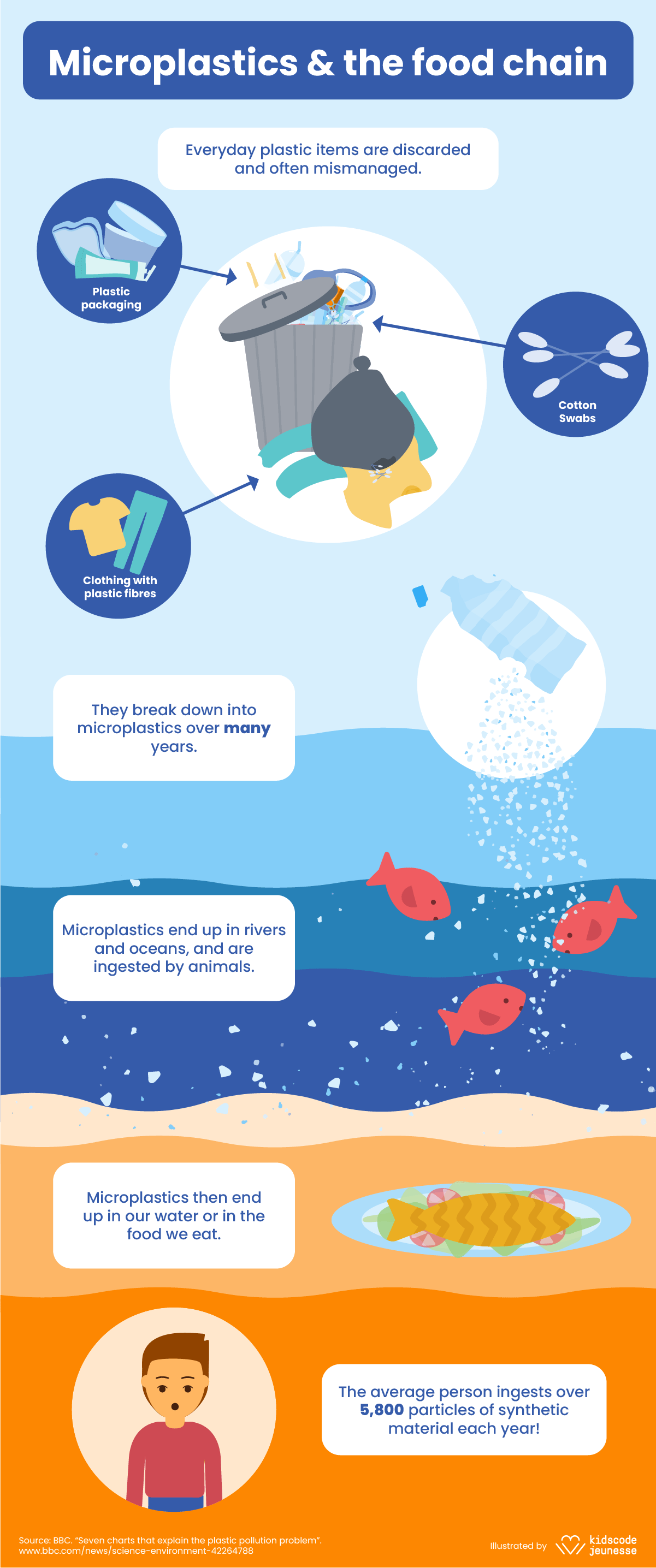 source: Seven charts that explain the plastic pollution problem4
Use this infographic to reflect on these questions:
General
How does plastic break down differently than organic material? Why do some plastics take longer to break down than others?
Community
Can you think of a plastic-free alternative to cotton swabs? Can you find a plastic-free alternative for cotton swabs at your local store? How many other plastic alternatives can you find?
Ethical
How can we prevent this plastic from ever ending up in the ocean?
Want to dive deeper or just explore the sources?
We provide you with all the page sources and references along with additional related resources in one convenient location.
Due to the interactive nature of the online #kids2030 Challenge platform, it is not supported for mobile. To complete the #kids2030 Challenge, please use a desktop, laptop, or tablet in landscape mode.
Thanks!
