New Name, New Look, New Challenge!
This year's Challenge uses our digital skills to explore SDG #3, Good Health and Well-being.
New Name, New Look, New Challenge!
This year's Challenge uses our digital skills to explore SDG #3, Good Health and Well-being.
Now that you understand the problem of plastic pollution, the impact it has on the world, and how the SDGs are offering a path to build a better future, it’s time to get creative and find some ways to prevent plastic pollution!
As long as you take small steps, stay organized, and persevere, you can be part of the solution and contribute to positive change.
Step 1: Make a plastic reduction game plan
Remember the plastic items you collected data for? It’s time to find a solution to replace one of them! After deciding which item you’ll focus on, next you’ll figure out how you will reduce the amount of plastic you consume. When lots of people do this, it sends a message to manufacturers that they need to produce less plastics!
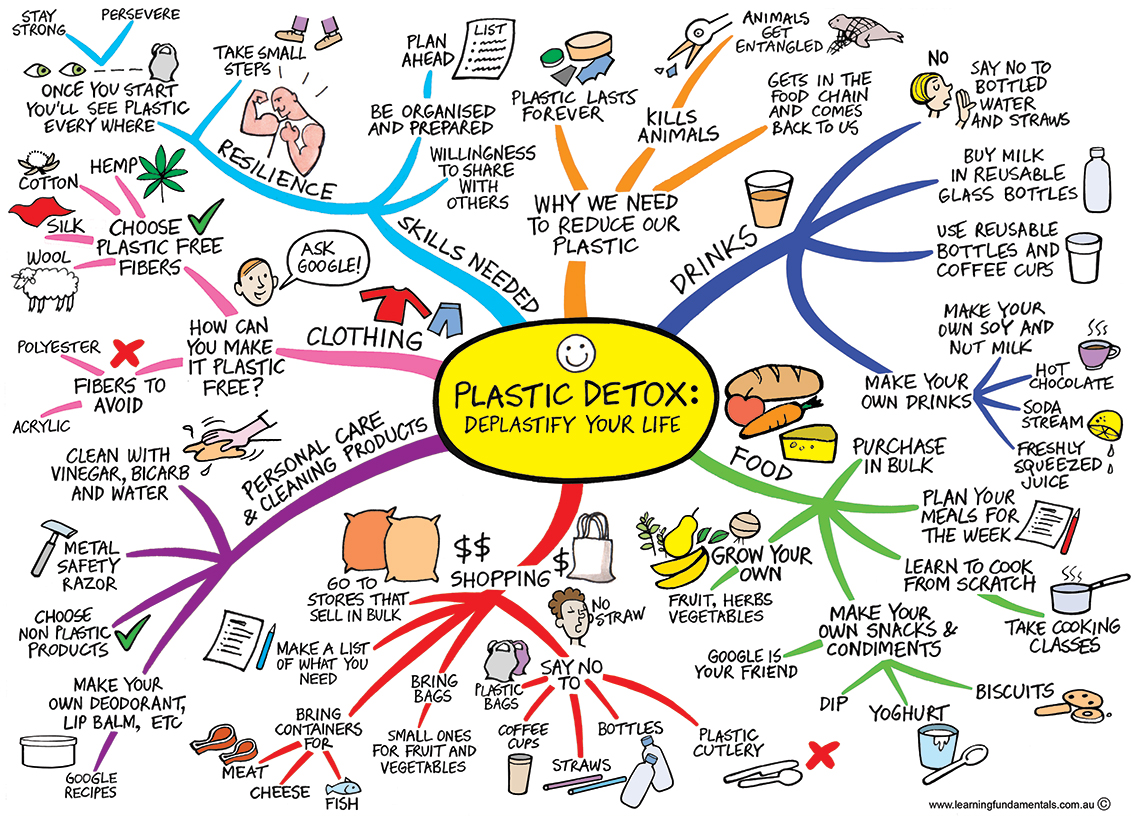
Take a look at this diagram for some plastic reduction inspiration:
Step 2: Create a new idea to replace plastics
Next, it’s time to think of a solution or alternative that replaces that plastic item.
As you saw in the data earlier, not all plastics are recycled, or can be recycled. It’s up to you to think how to reduce plastic consumption or reimagine the product to become plastic-free. This could be a brand new invention, or even re-inventing how you use an existing product — and the idea can be as big or as small as you’d like!
Here are some interesting ideas to get you started:
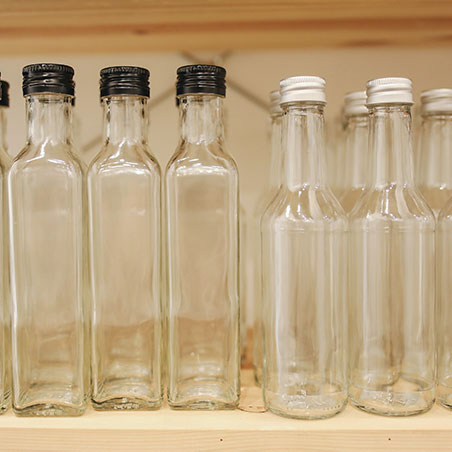
Use glass instead of plastic
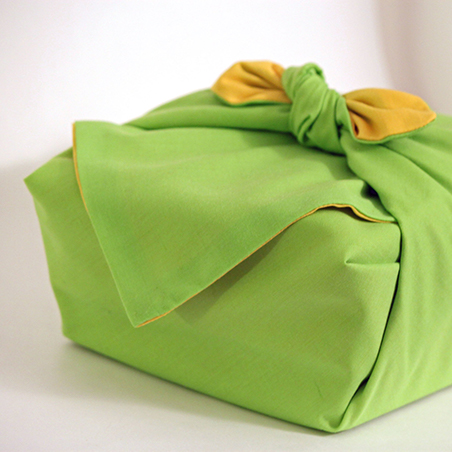
Cloth wrapping paper

Edible utensils
Step 3: Design your solution
Grab a paper and some pencils and draw out your idea.
Afterwards, describe your solution in the space provided below.
Step 4: Predict the impact
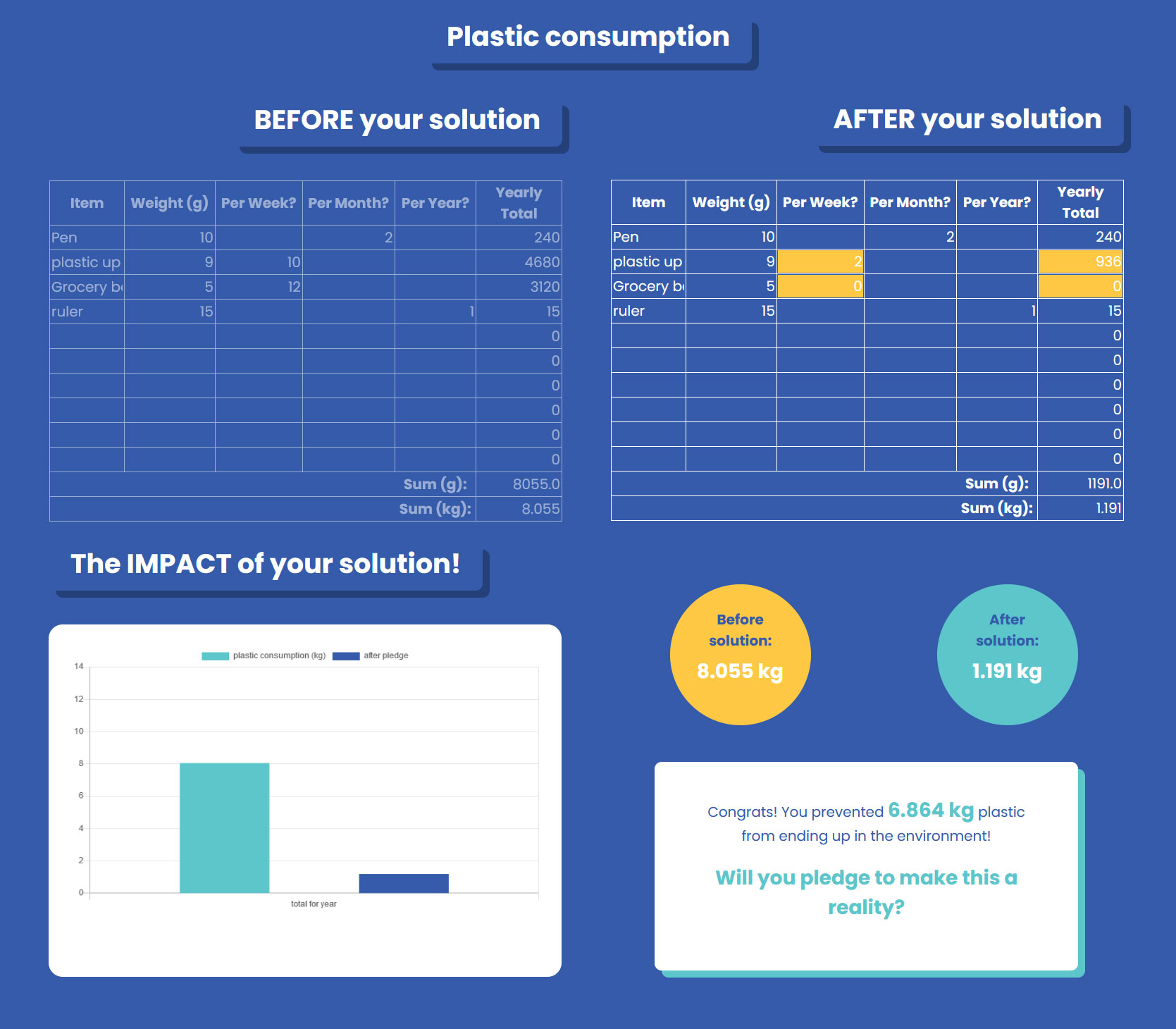
Focusing on the plastic item you chose to replace, take a look at the weight estimates that you collected in the DATA section earlier. Now you will estimate how much plastic you would consume per year after implementing your solution — you can think of this plastic reduction like a pledge!
Enter in all your data below, and watch the bar chart calculate the impact of your solution!
Before
solution:
After
solution:
Congrats!
You prevented
of plastic from ending up in the environment!
Will you pledge to make this a reality?
Thinking of solutions to plastic pollution is challenging — but there are many different ways to solve this problem! One person’s individual impact may be small, but if we work together we can make massive change.
You’ve nearly completed the challenge - wow!
You’ve successfully created a solution to prevent plastic pollution. Now you can test your data science and plastic waste knowledge with a Quiz.
Not in a rush and want to take it a step further?
This extension activity will help you visualize your solution and share it with others.

Learning Objectives
Recommended ages
Ages 7+
Recommended duration
15-20 min
After working hard on your idea or solution, it’s time to put your plan into action! This Scratch activity will help you visualize the ideas you’ve come up with to help solve the plastic problem, and share it with the people you care about.
Remember this infographic from earlier? Let’s take a look at it again to reflect on these questions:
General
How does your household manage plastic waste at home? Do you think it’s enough?
Do you think the following materials could be used to make products without plastic?
Community
Recycling, landfill, and incineration are well-known ways we manage our plastic waste, but they can cause problems too. Can you think of some of the negative side effects?
Ethical
Recycling, landfill, and incineration are well-known ways we manage our plastic waste, but they can cause problems too. Can you think of some of the negative side effects?
Want to dive deeper or just explore the sources?
We provide you with all the page sources and references along with additional related resources in one convenient location.
Due to the interactive nature of the online #kids2030 Challenge platform, it is not supported for mobile. To complete the #kids2030 Challenge, please use a desktop, laptop, or tablet in landscape mode.
Thanks!